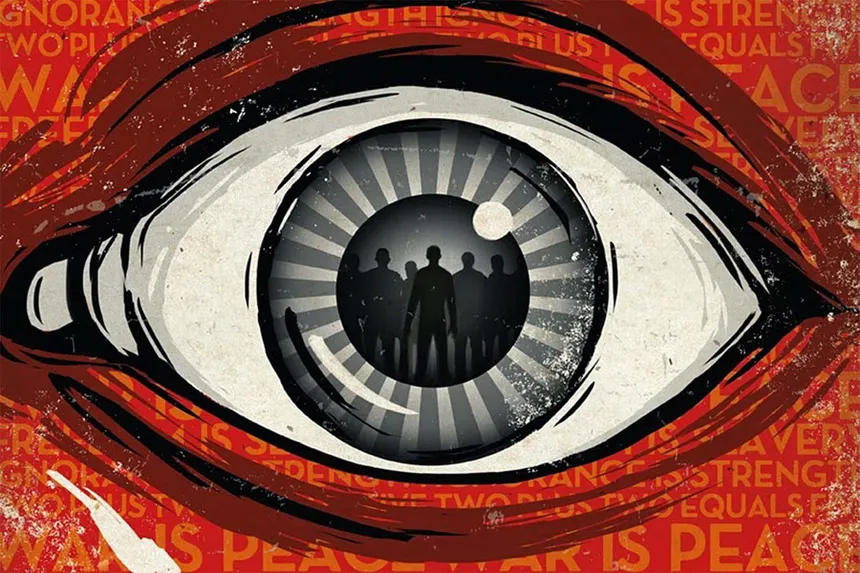

Flock Safety, the company blanketing American roads with more than 100,000 license plate reader cameras, has built its business on a simple pitch to city councils: trust us. The record suggests they shouldn't. Here are six documented instances where the company's public statements didn't survive contact with the facts.
1. The Oshkosh heat map lie
In April 2026, a city council member in Oshkosh, Wisconsin asked Flock's chief information security officer, point blank, at a public meeting, whether the company's system created heat maps revealing where a particular vehicle had traveled over time. He told the council it did not "create a pattern or heat map of an individual's movement." The council approved the contract that night. By the next morning, the city learned the statement was false, and Flock later admitted its system does produce a heat map of where a vehicle has been photographed for up to a month. Oshkosh revoked the contract one day after approving it, a record. Flock's response was to call its false statement "one small misconception."
2. "We have no federal contracts"
When Loveland, Colorado's police chief raised concerns that federal agents were accessing the town's camera data, Flock told him federal agencies no longer had access, and CEO Garrett Langley told the press Flock had no federal contracts. The company was later forced to admit it had pilot contracts with U.S. Customs and Border Protection and the Department of Homeland Security that gave those agencies direct access to license plate data. Langley's explanation, per NPR: "We clearly communicated poorly," and the company's statements "inadvertently provided inaccurate information."
3. "Does Flock share data with ICE? No."
After 404 Media revealed that local police were routinely running Flock searches on behalf of ICE and CBP, Flock published a blog post titled "Does Flock Share Data With ICE? No.", resting on the technicality that ICE lacked direct access while the company knew federal agents were getting the data indirectly through its law enforcement customers. The denials collapsed under audits and litigation: a San Francisco compliance audit found 299 improper queries run on behalf of federal and out-of-state agencies, and a class action alleges ICE, CBP, the FBI, and ATF queried the city's cameras more than 1.6 million times in seven months. Flock's CEO eventually conceded the system was used for immigration enforcement. Whether you support ICE or not, Flock lied.
4. "We partnered with the ACLU"
Flock has repeatedly claimed to work with the ACLU. In a 2021 Urbana, Illinois council meeting, the company said it had "worked with groups like the ACLU to design an ALPR system." In 2026, a Flock public affairs executive claimed on LinkedIn that Flock "partnered with the ACLU of New Mexico" to craft legislation. The ACLU's response: neither the national organization nor any affiliate has ever partnered with Flock on anything.
5. The abortion-search "safeguard" that doesn't work
After a Texas officer used Flock's network to search nationwide for a woman who had an abortion, Flock announced a "Proactive Search Term Tool" it claimed would block impermissible searches. An ACLU of Massachusetts investigation found police routinely defeat it by typing vague reasons like "investigation" or "susp", one Oregon department entered "hehehe" as its search justification 20 times in a single month and was allowed through. Any basic test would have shown the tool was trivially circumventable; Flock marketed it as meaningful protection anyway.
6. The crime statistics that don't add up
Flock's flagship marketing claim, that its technology helps solve 10% of reported crime in the U.S., came from a study Flock conducted itself. One of the academics who oversaw it told 404 Media the underlying data was "too varied and incomplete... to do any type of meaningful statistical analysis," while other criminologists called the claim "borders on ludicrous" and doubted it would survive peer review. Earlier, Forbes found that a city Flock touted for an 80% burglary reduction had actually seen burglaries increase.
So what about facial recognition?
Flock's official position is that it doesn't do facial recognition, that its cameras capture vehicles, not identities, and "cannot recognize, identify, or track individuals." Given the pattern above, how much is that assurance worth?
Consider the trajectory. Leaked materials obtained by 404 Media showed Flock building "Nova," a people-lookup tool designed to let police "jump from LPR to person" by fusing plate data with data broker records, and Flock only backed away from using hacked breach data in it after journalists exposed the plan. The company's claim that it collects no personally identifiable information was always a legal fiction; a plate resolves to a registered owner in seconds.
Every lie in this list follows the same shape: deny the capability, get caught, reframe the lie as a "communication" problem, keep selling. The heat map existed. The federal contracts existed. The ICE access existed. The safeguard didn't work. If Flock's denials have been this reliable a signal of what the company is actually doing, its facial recognition denial deserves the same presumption, not that it's necessarily false today, but that the company has forfeited any claim to being believed.
Sources: ACLU, 404 Media, NPR, WBAY, Forbes, Courthouse News.
Photo credit: ctaylorwa
