
The Battle Against “Trash and Filth”: Germany’s Century-Long Struggle to Shield Youth from Mass Media
In the late 19th and early 20th centuries, rapid industrialization and revolutionary advances in printing technology democratized reading as never before. Cheap pulp fiction, dime novels, serialized stories, and illustrated magazines, flooded the market, reaching working-class readers and young people on an unprecedented scale. What many celebrated as progress, others viewed with alarm. Conservative lawmakers, moral guardians, and cultural elites warned that this new “mass literature” threatened intellectual, moral, and even physical decay among the youth.
In Germany, this anxiety crystallized around the phrase Schmutz und Schund, “smut and trash.” From penny dreadfuls and dime novels to comic books and, later, films, ephemeral popular media became the target of a sustained moral crusade. New production techniques allowed books and magazines with illustrations to be produced so inexpensively that they reached a true mass readership. Yet the same forces of industrialization and urbanization that enabled this cultural explosion generated deep anxieties among the political classes. Guardians of the new nation-state saw themselves as protectors of the working class and, especially, a youth supposedly at risk of ethical corruption and “un-Germanization” in the Kulturnation of thinkers and poets.
The Weimar Republic’s Moral Protectionism
These concerns culminated in one of the most notable attempts at balancing democratic freedoms with moral oversight: the 1926 Gesetz zur Bewahrung der Jugend vor Schund- und Schmutzschriften, the Law to Protect Youth against Trash and Dirt. Proposed at a cabinet meeting on 19 December 1923, the bill was passed by the Reichstag on 3 December 1926 and took effect on 18 December 1926. It introduced post-publication censorship mechanisms aimed specifically at shielding minors from “filth and trash” in printed materials.
The law was more than a simple regulatory measure. Debates surrounding its passage further politicized an already contentious cultural landscape in Germany. Historians note that it contributed, in a small but definite way, to the shifting political alignments that helped pave the path for the Nazi takeover in January 1933.
Continuity Across Regimes
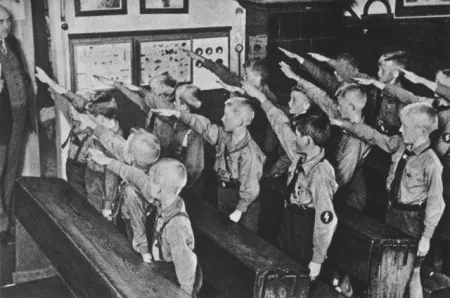
The underlying tension between youth protection and media freedom did not disappear with the Weimar Republic. During the Nazi era, stricter controls emerged, including the highly controversial Polizeiverordnung zum Schutze der Jugend (Police Ordinance for the Protection of the Youth), which imposed punishments on both minors and responsible adults. Earlier precedents, such as the 1920 Lichtspielgesetz regulating films, also fed into this tradition of state oversight.
After World War II, the newly formed Federal Republic of Germany replaced Nazi-era rules with the 1951 Law for the Protection of Minors in Public. This legislation evolved into the modern Jugendschutzgesetz (Protection of Young Persons Act), which continues to shape how Germany regulates media access for minors today. The Reichsschrifttumskammer (Reich Chamber of Literature) under the Nazis represented an extreme version of cultural control, but the broader impulse to protect youth from perceived harmful content persisted across democratic and authoritarian systems alike.
Enduring Questions
Germany’s experience with Schmutz und Schund illustrates a recurring dilemma in modern societies: how to reconcile freedom of expression with the desire to safeguard the young from content deemed corrosive. What began as anxiety over dime novels and penny dreadfuls evolved through comic books, films, and later electronic media, yet the core debate remains strikingly familiar. Today’s discussions about screen time, violent video games, social media algorithms, and online “filth” echo the moral panics of a century ago.
The 1926 law and its successors remind us that efforts to legislate morality often carry unintended political consequences. While framed as protective, such measures can become tools for broader cultural and political control. Germany’s trajectory, from Weimar moral protectionism through Nazi authoritarianism to the structured framework of today’s youth protection laws, offers a compelling case study in the persistent challenge of drawing lines between liberty and guardianship in an age of mass media.
References
- Springer chapter on pulp fiction and moral decay (link.springer.com/chapter/10.1057/9780230800939_14).
- Historical analysis of Schmutz und Schund anxieties in the German Kulturnation.
- Cambridge University Press article on the 1926 Law: “Moral Protectionism in a Democracy.”
- Ibid. (contribution to political alignments pre-1933).
- Wikipedia / Wikiwand entries on the Protection of Young Persons Act (Germany), citing the 1920 Lichtspielgesetz and Nazi ordinances.
- Post-war evolution to the 1951 law and modern Jugendschutzgesetz.
- Broader context drawn from the provided historical sources.
This history is not merely academic. In every era of technological disruption, societies grapple anew with the same question: Who decides what the next generation should read, watch, or consume, and at what cost to freedom? Germany’s long struggle with “trash and filth” provides sobering lessons for our own time.
